Navigating Digital Vaults: Security Protocols Governing Asset Transfers in Interactive Gaming Networks

Interactive gaming networks rely on digital vaults to manage asset transfers between players, platforms, and external payment systems, and these systems operate under layered security protocols designed to prevent unauthorized access while maintaining transaction integrity. Protocols combine cryptographic standards, access controls, and continuous monitoring to handle everything from in-game currency exchanges to cross-platform wallet movements.
Core Architecture of Digital Vaults
Digital vaults function as secure repositories that store encrypted keys and transaction records for gaming assets, and they integrate with network ledgers to record every transfer in real time. Multi-signature requirements often govern withdrawals, which means multiple authorized parties must approve movements before assets leave the vault. Researchers at institutions studying distributed systems note that this setup reduces single-point failures while allowing networks to scale during peak activity periods.
Asset classification plays a central role in protocol design, since different types of in-game items and currencies trigger varying levels of scrutiny. High-value transfers route through additional verification steps that include behavioral analytics and device fingerprinting, whereas smaller routine movements use streamlined checks that still maintain audit trails.
Encryption Standards and Authentication Layers
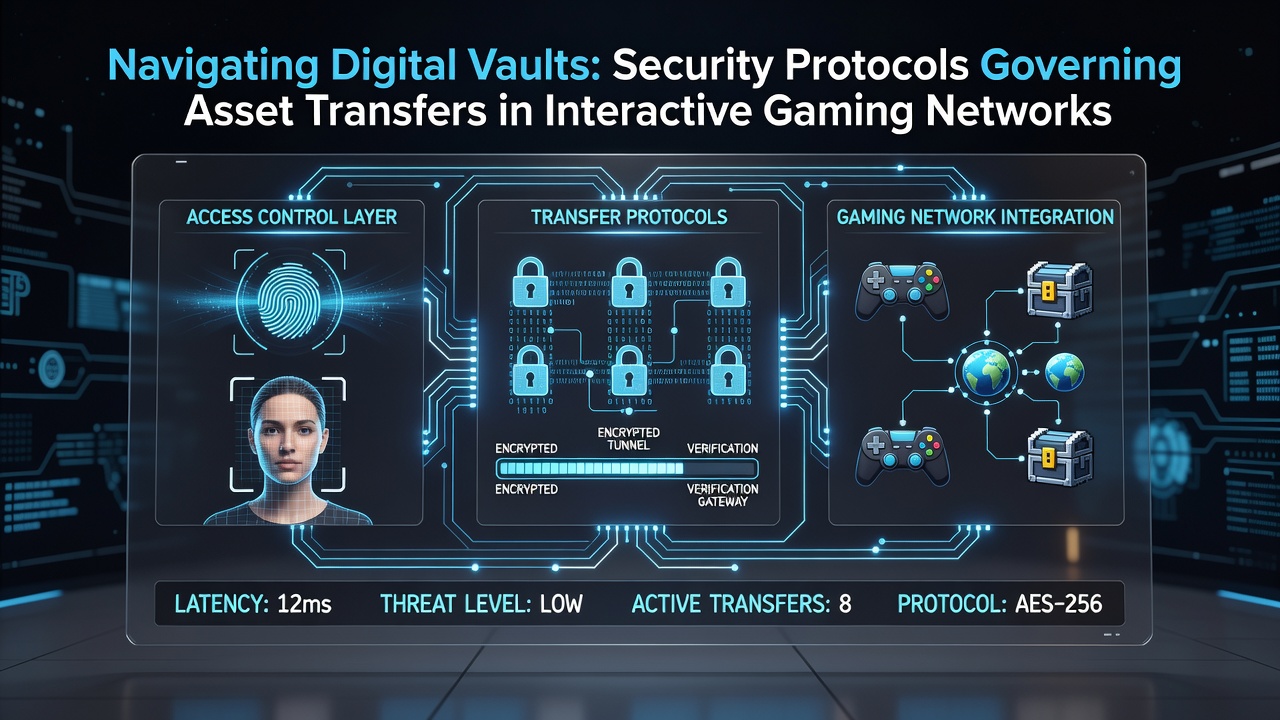
Encryption protocols draw from established frameworks such as those outlined by the National Institute of Standards and Technology, where AES-256 remains the baseline for data at rest and TLS 1.3 secures data in transit. Key rotation schedules occur at fixed intervals to limit exposure windows, and hardware security modules isolate cryptographic operations from the main network environment.
Authentication extends beyond passwords to include biometric verification and time-based one-time codes, while session tokens expire rapidly to curb replay attacks. Adaptive risk models adjust authentication demands based on transaction patterns, location data, and device history, so unusual activity prompts immediate escalation without halting legitimate play.
Integration with Distributed Ledger Technologies
Many networks now embed blockchain elements into their vault infrastructure to create immutable records of asset movements, and these ledgers operate alongside traditional databases for redundancy. Smart contracts automate conditional transfers, releasing funds only when predefined criteria such as game outcomes or escrow periods are met. Observers note that this hybrid approach provides both transparency for regulatory reviews and speed for player-facing transactions.
Cross-chain bridges allow assets to move between different gaming ecosystems, yet they introduce additional protocol requirements around bridge security audits and liquidity management. Regular penetration testing targets these connection points because they represent high-value attack surfaces within the broader network.
Regulatory Compliance and Reporting Mechanisms
Compliance frameworks require networks to maintain detailed logs that authorities can access during audits, and reporting intervals vary by jurisdiction. Guidelines from the European Union Agency for Cybersecurity emphasize continuous risk assessment and incident notification timelines, while Canadian regulatory bodies focus on consumer protection standards that include vault solvency verification. As of June 2026, updated reporting templates have begun incorporating real-time data feeds to accelerate oversight processes.
These requirements drive the adoption of automated compliance tools that flag discrepancies in transfer volumes or patterns, and they integrate directly with vault monitoring systems to generate reports without manual intervention. Networks that operate across multiple regions maintain separate protocol configurations to satisfy each set of rules while preserving core security functions.
Monitoring, Incident Response, and Future Developments
Continuous monitoring systems track vault activity through anomaly detection algorithms that compare current behavior against historical baselines, and alerts route to security teams for rapid assessment. Incident response plans include predefined escalation paths that isolate affected vaults while preserving evidence for forensic analysis. Those who manage these systems emphasize the importance of regular tabletop exercises that simulate various attack scenarios.
Emerging developments include post-quantum cryptography preparations and enhanced zero-knowledge proof implementations that allow verification without exposing underlying transaction details. Networks continue to refine these measures as computational capabilities advance and threat landscapes evolve.
Conclusion
Security protocols governing asset transfers in interactive gaming networks combine encryption, authentication, distributed ledgers, and regulatory alignment to protect digital vaults at every stage of operation. These measures evolve in response to technological shifts and compliance updates, ensuring that asset movements remain both secure and auditable across expanding platform ecosystems.